ServicesDual Tank Water Filtration
Dual Tank Water Filtration in Santa Paula
Our dual tank systems pair a carbon filter tank with a second tank that pulls out hardness minerals. You get better tasting water at every tap and less scale building up in your water heater, fixtures and appliances. Licensed plumbers in California handle the install.
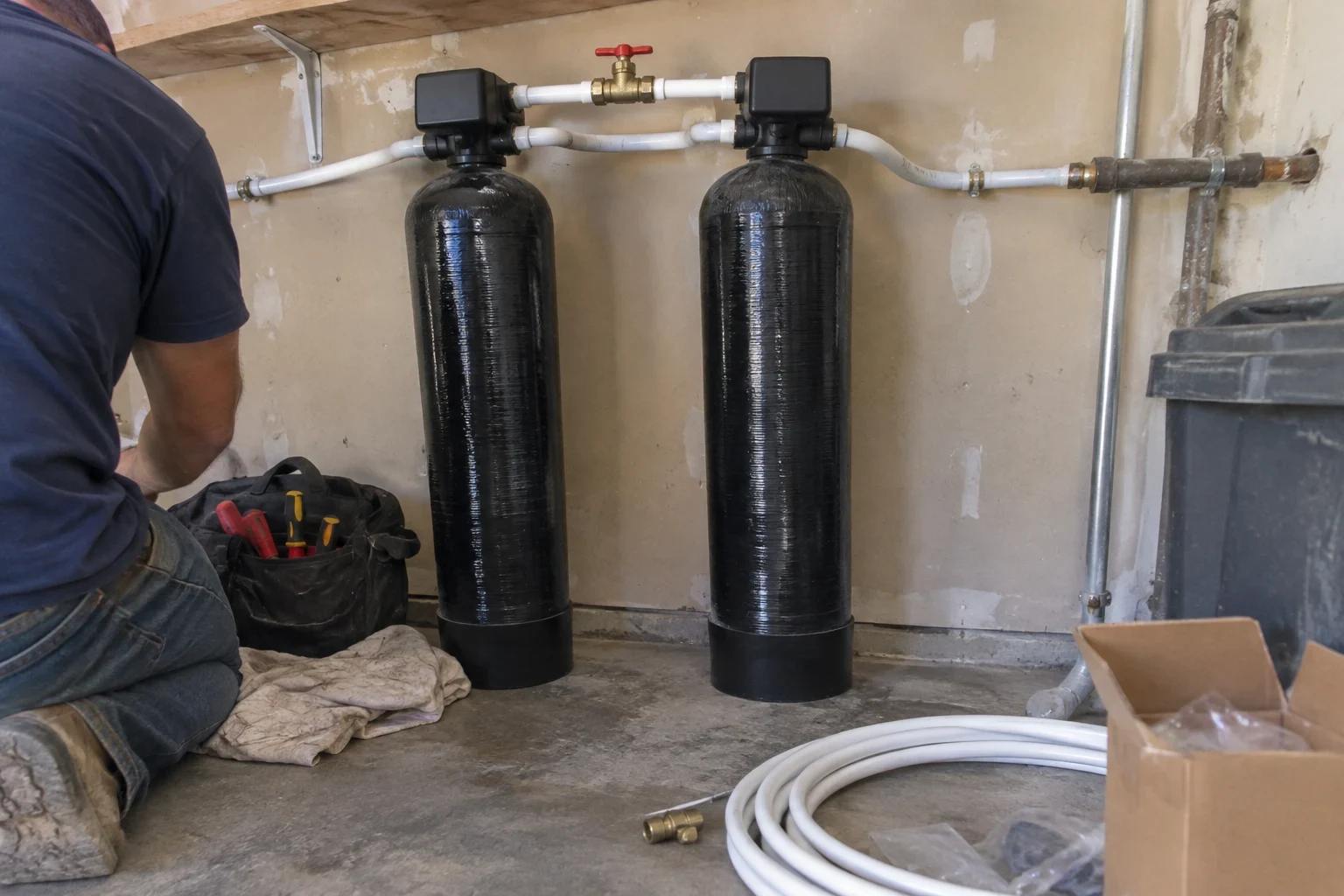
Two Tanks, Two Jobs
A dual tank system goes where the water line comes into your home, usually in the garage or along an outside wall. The water first runs through activated carbon, which takes out the chlorine you can taste and smell in city water. From there it flows into a second tank of resin beads. The beads grab calcium and magnesium, the minerals that leave white crust on faucets and shower glass. A small brine tank next to them stores salt that washes the resin clean on a set schedule.
Mineral-heavy water slowly lines the inside of a water heater. That lining sits between the burner or element and the water like a layer of insulation, so the heater runs longer to give you the same hot shower. Keep the scale out and the heater works less and tends to last longer. Your dishwasher and washer clean better with less detergent too.
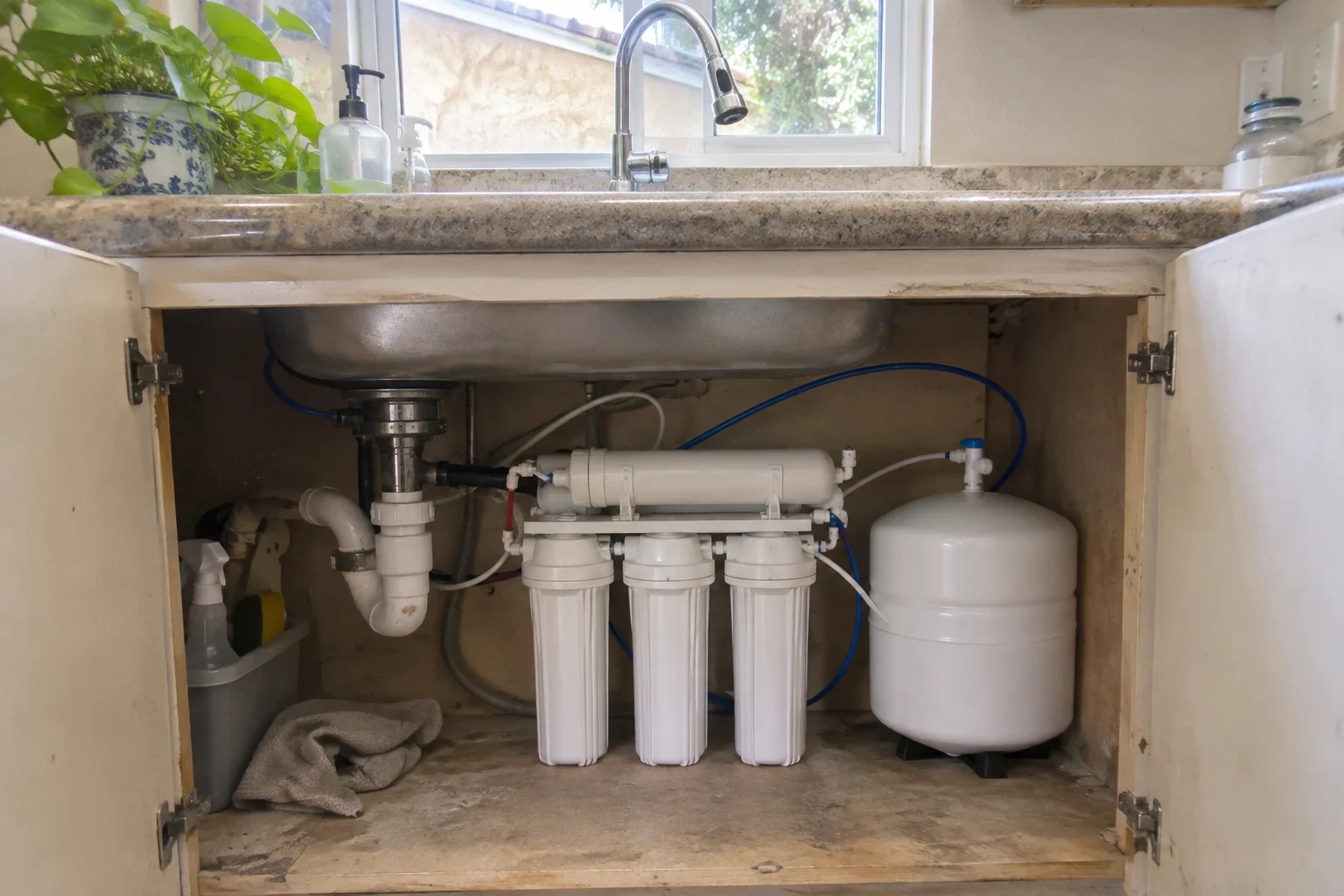
Some people only care about the water they drink and cook with. For that, a single unit under the kitchen sink may be enough, and our Reverse Osmosis page explains how it works. When scale and chlorine taste show up at every faucet in the house, a two-tank setup is usually the better choice.
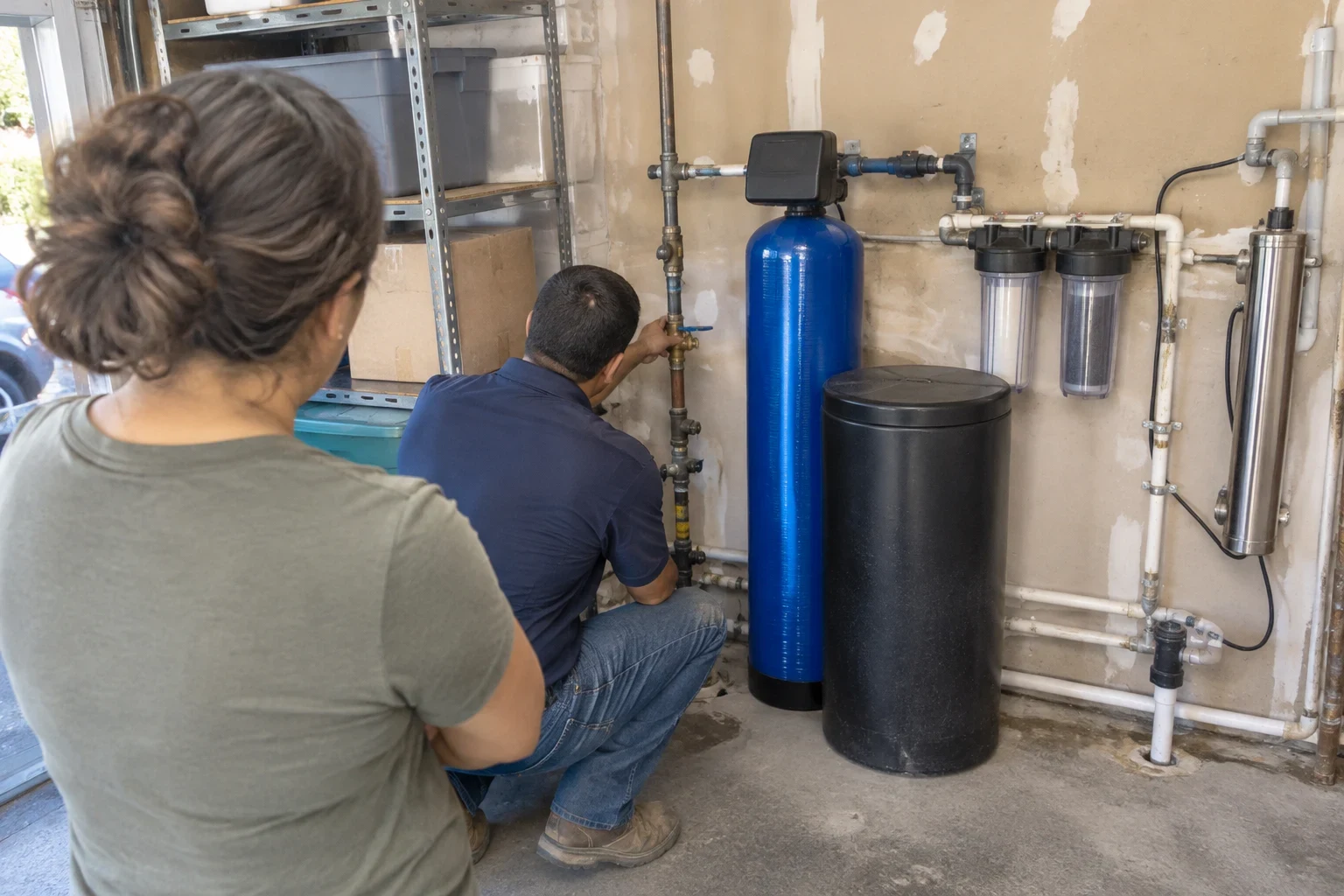
Everything in the Two-Tank Package
- 01
Activated carbon tank
The first tall tank holds activated carbon that pulls chlorine taste and odor out of the water as it comes into the house. The pool smell leaves your showers, and every sink pours water that tastes clean.
- 02
Hardness tank
Tank number two traps the minerals that coat pipes, fixtures and the inside of your water heater. The valve on top counts the gallons you use and cleans the resin on its own when it needs it.
- 03
Salt tank, filled on day one
The system cleans itself with the salt stored in the brine tank. We provide free salt and fill the tank at install, so everything runs from the moment we wrap up.
- 04
Valve to go around the tanks
A bypass sends water past the tanks so the rest of the house never goes dry. Service gets easier, and your faucets keep flowing the whole time.
- 05
Plumbing by licensed plumbers
We cover the cost, so the install is free. Licensed plumbers in California fit the system with the correct parts, add a drain line for the cleaning cycle and clean up before leaving.
- 06
Three-year coverage
All units carry a free 3-year warranty. Should a tank or the control valve break down during those years, we handle it.
Questions about Dual Tank Water Filtration?
Call(805) 420-7578Signs Your Home Could Use Two Tanks
White crust on faucets
Chalky rings at the base of a faucet or around a showerhead are mineral deposits. When they return a few weeks after you clean them, the same buildup is happening inside your pipes.
Spots on dishes and glass
Glasses that come out of the dishwasher cloudy and shower doors covered in spots mean minerals are left behind as the water dries.
Chlorine smell in the shower
That swimming pool smell with hot water running is chlorine released into the steam. Carbon in the first tank removes it.
A water heater that pops or rumbles
Those sounds usually come from scale and sediment sitting on the tank bottom. The heater has to push heat through that layer, so it works harder than it needs to.
Soap that will not lather
Minerals in the water keep soap and shampoo from foaming. You use more, and your skin and hair may feel dry after a shower.
How a Two-Tank Install Goes
- 1
A phone call to start
Describe what shows up at your taps, how many people are in the house and where the main line enters. We figure out with you if two tanks are right or if another system suits you better, and quote it over the phone.
- 2
Look at the pipes and space
We inspect the main line, the floor area where the tanks will stand and the route for a drain line. Any aging pipe by the connection gets pointed out to you before we start.
- 3
The install
With the water off, we tie the tanks into the main line and add the bypass. Next comes the drain line, salt in the brine tank and the cleaning schedule on the valve. Most houses are only without water for part of the day.
- 4
A quick lesson
We walk you through the bypass, checking the salt and reading the control valve. You leave knowing what to keep an eye on and when to give us a call.
What Your Price Depends On
You pay nothing for the install, because we cover that cost. Your price is for the equipment, and a handful of things about your house decide which setup fits. We walk through every line of the quote with you, so no surprises come up afterward.
- How much water your family uses
- Five people and three bathrooms push far more water through the tanks between cleanings than two people do, so heavier use calls for bigger tanks. We match the size to your real use, not the largest model we stock.
- Which carbon goes in
- Regular activated carbon does a good job on chlorine. Some houses do better with another carbon blend, which can move the price up or down.
- Location of the main line
- Tying in at an open garage wall goes fast. A main hidden behind finished walls, or far from a place to drain, can need extra pipe and fittings.
- Shape the pipe is in
- Corroded or leaking pipe where the tanks hook up should be fixed before anything else. We show you what we see, and you make the call.
Dual Tank Questions
How often do I add salt?
A lot of homes go through about one bag every month or two. Your water use and how many minerals are in the water decide the pace. Lift the brine tank lid and you can see the level. The first fill is done before we leave.
Does the system use a lot of water or power?
Each cleaning cycle uses some water, and the valve draws a little electricity. Because the valve counts how much water you use, it only cleans when the resin needs it. On the other side, a water heater without a crust of scale inside spends less energy getting your water hot.
Will my water pressure drop?
With tanks sized to your household, most people do not notice any difference. Pressure trouble usually comes from tanks that are too small, so we size by your real water use.
What if the system ever needs work?
Turn the bypass valve and water flows straight to your home around the tanks. You keep running water while the system is down. Then give us a call and we will come take a look.
Do I still need a drinking water system?
Plenty of people are fine with the water from two tanks. If you want cleaner water for the coffee pot and the cooking pot, a reverse osmosis unit at the kitchen sink works well alongside it. See our Reverse Osmosis page for how that setup works.
How long do the tanks last?
With simple upkeep the tanks and valve keep going for many years. The carbon gets used up over time and is swapped out every few years, based on how much water runs through it. We tell you the signs to look for.
Less Scale, Better Water at Every Tap
Tell us about your home and what you see at the faucets. We will tell you if two tanks is the right fit and what it will take.