ServicesReverse Osmosis
Reverse Osmosis in Santa Paula
We install reverse osmosis systems under your kitchen sink so your drinking and cooking water comes from its own faucet. You stop hauling cases of bottled water home. The work is done by licensed plumbers in California and usually takes part of a morning.
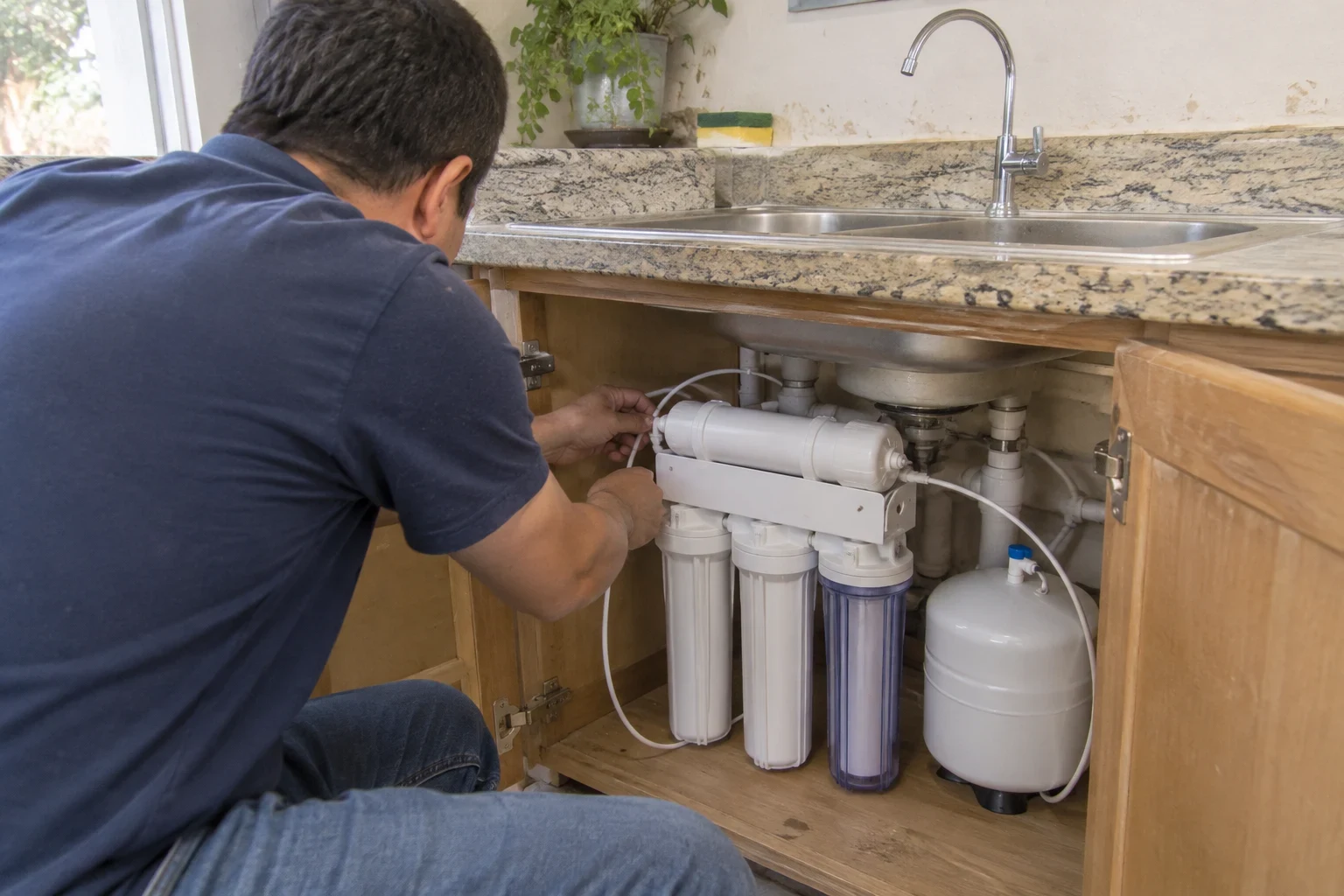
What Reverse Osmosis Does at Your Sink
Reverse osmosis forces water through a membrane with pores much finer than most dissolved minerals and a long list of other things you would rather not drink. A sediment filter up front stops grit, and a carbon filter removes chlorine taste and smell. One last carbon stage after the membrane gives the water a final polish before it reaches your glass.
This system works at one spot. It cleans the water you drink and cook with at the kitchen sink. Your shower, laundry and outdoor taps stay as they are. That is plenty for most families, and keeping treatment to one tap keeps the upkeep cheap.
If your kettle grows a white crust or your ice comes out cloudy, minerals are the reason. RO water clears that up right where taste counts most.

What We Install
- 01
Pre-filters
A sediment cartridge and a carbon block come first in line. They catch grit and strip out chlorine before either can reach the membrane, so it lasts longer.
- 02
The membrane
Most of the cleaning happens here. We pick one sized to the amount of water your household drinks and cooks with in a day.
- 03
Storage tank and faucet
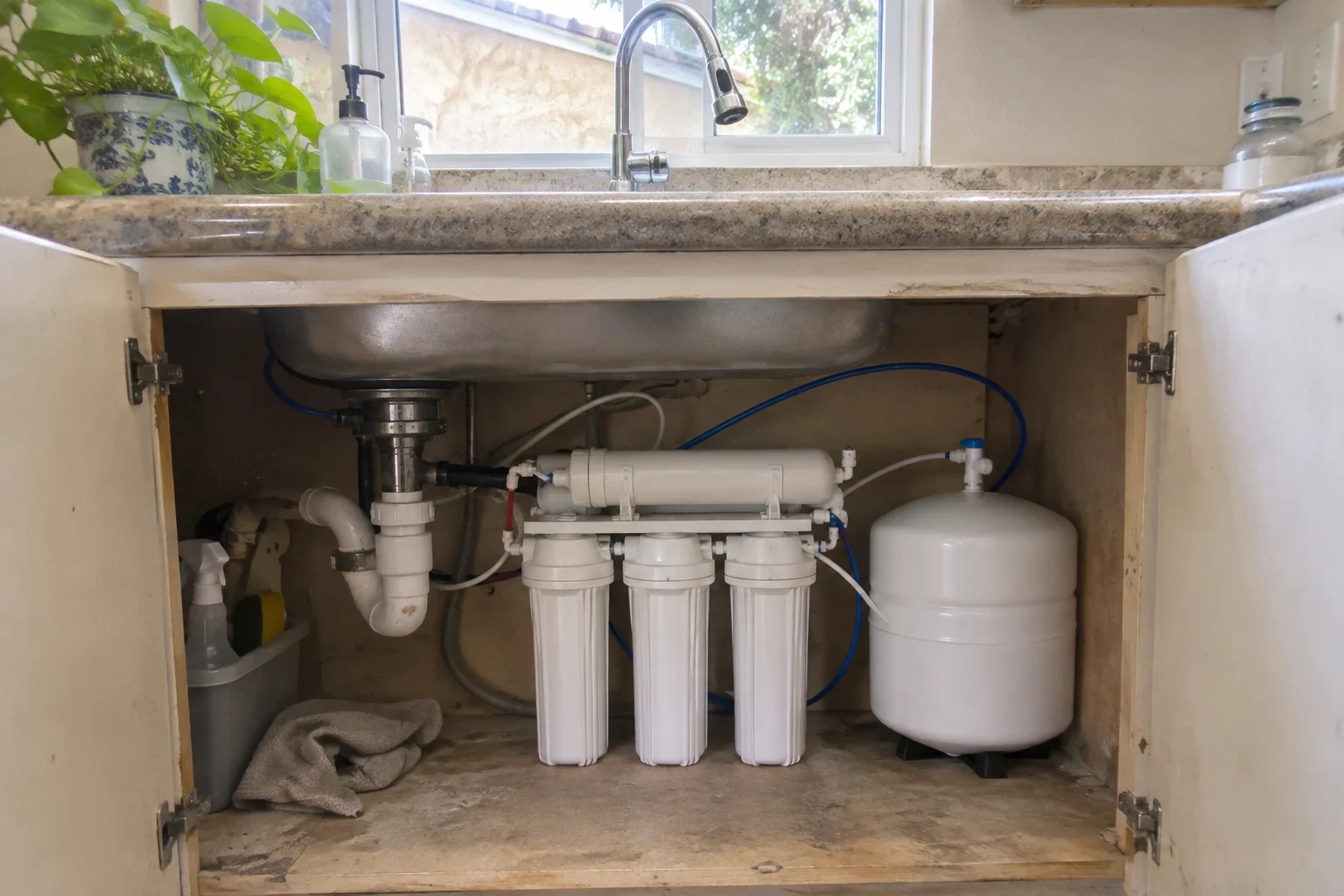
A small pressurized tank stands in the cabinet beside the filters. Your filtered water comes out of its own faucet on the sink or counter and never mixes with the main tap.
- 04
Drain and supply connections
We tap into the cold water line and set the drain with an air gap, so used water can never flow back into the system. Each fitting is tightened and checked before we close the cabinet.
- 05
Optional fridge line
Got an ice maker or a water dispenser in the fridge door. We can feed it RO water too. You get clear ice, and the fridge's own filter barely has to work.
Questions about Reverse Osmosis?
Call(805) 420-7578Signs Reverse Osmosis Is a Good Fit
You buy bottled water every week
Those cases add up and crowd the pantry. An RO faucet takes over most of that job, and a year of filter changes usually runs less than a year of bottled water for a family.
Scale in the kettle and coffee maker
That white crust is minerals left behind when water boils. RO water leaves almost nothing, so small appliances stay clean and heat up without a mineral layer slowing them down.
Cloudy ice and spotted glasses
Minerals in the water turn ice cubes cloudy and leave spots as glasses dry. Water from the RO faucet takes care of both.
Water tastes off
When water tastes like chlorine or minerals, people reach for soda instead. The carbon stages take out the chlorine and the membrane takes out the minerals.
Pipes that have some years on them
Aging pipes and old fittings can leach metals into what comes out of the tap. RO adds another layer of protection right where you fill your glass.
What Happens on Install Day
- 1
It starts with a call
Let us know your sink type, the space under it and whether you want filtered water at the fridge. We give you a quote and set a time that works for you.
- 2
Check the cabinet and pressure
When we arrive, we look over the cabinet and test your water pressure. Low pressure makes an RO system fill slowly, so if yours is low, we explain what that means before starting.
- 3
Hang the parts and hook up
After drop cloths go over the floor and counter, we clear the cabinet, mount the filter housings, place the tank and drill a faucet hole when needed.
- 4
Flush, inspect and show you how
We run water through the new filters until the loose carbon dust is gone, then look at every joint for drips. We wipe the cabinet clean and show you how and when to swap filters.
What Goes Into Your RO Price
No two kitchens are set up the same, so we price your system by phone once we know what you need. We cover the install, so your money goes mostly to the equipment. You hear the full price before any fitting gets connected.
- Number of stages and tank size
- A standard four or five stage unit sits at the lower end. More stages or a bigger tank raise the price. We size the system to what your family actually drinks, not to the largest unit on the market.
- Less water to the drain
- Older RO systems can waste several gallons for every gallon you drink. A permeate pump or a more efficient membrane cuts that waste and trims your monthly water bill, at a slightly higher upfront cost.
- Your counter and the faucet hole
- If an old sprayer left an open hole, the new faucet goes right in. Quartz, granite and other stone tops have to be drilled slowly and carefully, which adds time.
- Adding a line to the fridge
- Sending RO water to an ice maker or door dispenser means more tubing and more time. A fridge across the kitchen takes more work to reach than one beside the sink.
Your RO Questions
Do I need an outlet for an RO system?
Usually not. Most under-sink units run on the water pressure your plumbing already has, so there is nothing to plug in and no change to your electric bill. A booster pump only comes into play when house pressure is very low, and we tell you before install day if yours needs one.
How much water does the unit send down the drain?
Every RO unit uses some water to rinse its membrane, and that water goes to the drain. The amount depends on the model and your water pressure. Adding a permeate pump cuts it down a lot, and we can go over the tradeoff by phone.
When do the filters need changing?
Plan on new pre-filters once or twice a year, more often if your kitchen sees heavy use or your water carries more grit. The membrane goes much longer. We can show you how to swap them, or we can do it for you.
Is there a warranty?
Yes. Each unit we put in comes with a free 3-year warranty. Call us if a part gives you trouble in that time and we will come take a look.
Will it fit under a sink that already has a disposal?
Most of the time, yes. The filter housings hang on the cabinet's side wall and the tank sits next to them. When room is short, we go with a slimmer tank or set it in the neighboring cabinet.
Get Cleaner Water From Your Kitchen Tap
We serve Santa Paula and towns close by, such as Fillmore, Ventura and Ojai. Describe your kitchen and we will give you a straightforward quote by phone.